AI: Unlocking Your Channel's Evolution - Redditors Rejoice!
7|0 comments
Agentic AI: From Tool to Tireless Partner
The Dawn of the Agent Okay, friends, let's talk about something *huge*. We're standing on the precipice of a real revolution, a fundamental shift in how we work, create, and even *think*. It's called Agentic AI, and I know, I know, the AI buzzword bingo is getting a bit crowded, but trust me – this is different. This isn't just another incremental improvement; it's a paradigm shift! Forget the chatbots and the glorified search engines; we're talking about AI that can *act*—autonomous agents capable of planning, reasoning, and executing complex tasks across multiple applications and data sources. Think of it as going from having a helpful, but ultimately passive, assistant to having a team of tireless, hyper-competent collaborators. Instead of just answering questions, they *anticipate* needs, solve problems, and drive progress—all on their own. I’ve been watching this space closely, and I'm seeing the pieces align. We’re moving beyond the era of AI as a tool and entering the age of AI as a true partner. The McKinsey report, "Seizing the agentic AI advantage," hits the nail on the head: we're finally breaking free from the "gen AI paradox"—widespread deployment, minimal impact—and moving toward a future where AI delivers tangible, bottom-line results. But what does this *actually* look like? Imagine a world where supply chains self-optimize in real-time, customer service issues resolve themselves before you even know they exist, and new products are designed and launched with unprecedented speed and efficiency. One agent could interview process owners and summarize workflows, while another converts those summaries into process diagrams and optimizes them, according to Alfred Obereder, partner at BearingPoint. This is how agentic AI will scale real business impact! And it’s not just about efficiency; it’s about unlocking entirely new possibilities. Imagine AI agents embedded in connected products, monitoring usage, detecting performance thresholds, and autonomously unlocking features or triggering maintenance actions—enabling pay-per-use, subscription, or performance-based models of creating revenue. The possibilities are truly endless. But here's the thing: this isn't just about plugging in some new software. This requires a fundamental rethinking of how we organize our work, how we design our processes, and how we interact with technology. As Arthur Mensch, CEO of Mistral AI, so perfectly put it, “How do we want decisions to be made, work to flow, and humans to engage in an environment where software can act?” That’s the question we need to be asking.Agentic AI Mesh: Weaving the Future of Collaboration
Building the Mesh So, how do we get there? How do we move from the hype to the hyper-productivity? The answer, my friends, lies in building what McKinsey calls an "agentic AI mesh"—a new AI architecture paradigm designed to govern the rapidly evolving organizational AI landscape. This mesh is more than just a collection of tools; it's a dynamic, modular, and governed environment that enables multiple agents to reason, collaborate, and act autonomously across a wide array of systems, tools, and language models—securely, at scale, and built to evolve with the technology. The agentic AI mesh is a composable, distributed, and vendor-agnostic architectural paradigm that enables multiple agents to reason, collaborate, and act autonomously across a wide array of systems, tools, and language models—securely, at scale, and built to evolve with the technology. It's composable, meaning any agent, tool, or LLM can be plugged in without system rework; it’s distributed, meaning tasks can be decomposed and resolved by networks of cooperating agents; and it’s governed, meaning agent behavior is proactively controlled via embedded policies, permissions, and escalation mechanisms that ensure safe, transparent operation. Now, I know what some of you might be thinking: "This sounds complicated!" And you're right, it is. But the beauty of this mesh architecture is that it allows us to manage that complexity, to build systems that are both powerful and controllable. Nell Watson, AI ethicist and president at the European Responsible AI Office, has a point. "Agents can decompose complex goals, adapt to unexpected conditions, and orchestrate multi-step processes across systems without constant supervision," she explains. "They're becoming junior colleagues rather than sophisticated apps. But they're also brittle, exploitable, and prone to catastrophic failures that current frameworks weren't designed to handle.” That's why governance and security are paramount! This reminds me of the early days of the internet. Back then, connecting to the web was a messy, complicated process. But over time, we developed standards and protocols that made it easier for everyone to participate. The agentic AI mesh is like those early internet protocols—it's the foundation upon which we'll build the next generation of AI-powered systems. I saw an interesting comment on Reddit that sums up the excitement: "This isn't just automation; it's intelligent, dynamic execution." Exactly! It's about creating systems that can adapt, learn, and improve over time, without constant human intervention. And that, my friends, is where the real magic happens. A Future Forged in Collaboration But here's the thing we can't forget: technology is only as good as the people who use it. As agentic AI becomes more powerful and more pervasive, it's crucial that we address the ethical and societal implications. We need to ensure that these systems are used responsibly, that they are fair and transparent, and that they benefit all of humanity. We must remember that autonomy must be matched with explainability and security, according to Kurtoglu. “We evaluate every AI solution against privacy, reliability, transparency, and ethical impact. Without those safeguards, agentic AI risks becoming a black box, powerful but opaque.” This requires a shift in mindset, a move away from the old model of "humans vs. machines" and toward a new model of "humans *with* machines." The most valuable skills in this new world won't be technical proficiency; they'll be judgment, creativity, and the ability to collaborate effectively with AI agents. The employees will move from operating tools to orchestrating agents, as Watson notes. What does all of this mean? It means that the future of work isn't about replacing humans with machines; it's about augmenting human capabilities with AI. It's about freeing us from the mundane, repetitive tasks and allowing us to focus on the things that truly matter: creativity, innovation, and human connection. The Future is Now The age of Agentic AI is upon us, and the possibilities are truly limitless. I know there are challenges ahead—technical hurdles to overcome, ethical questions to answer, and societal shifts to navigate. But I am convinced that we are on the cusp of something extraordinary, something that will transform our world in profound and positive ways. This is the kind of breakthrough that reminds me why I got into this field in the first place. A Symphony of Intelligence The future isn't just automated; it's a collaboration, a symphony of human ingenuity and artificial intelligence working in harmony!

-
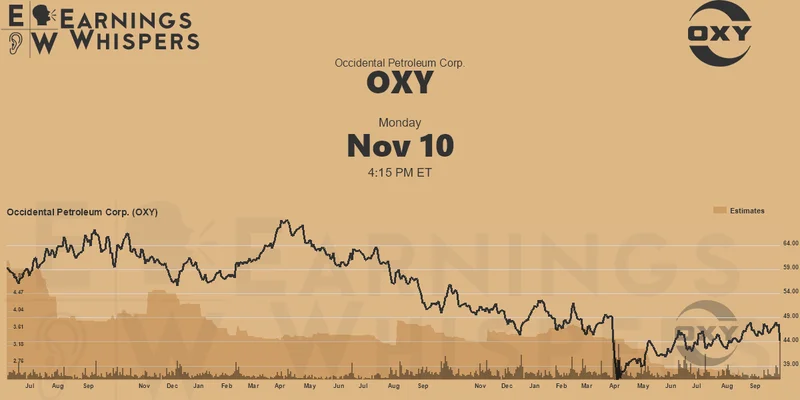
Warren Buffett's OXY Stock Play: The Latest Drama, Buffett's Angle, and Why You Shouldn't Believe the Hype
Solet'sgetthisstraight.Occide...
-

The Great Up-Leveling: What's Happening Now and How We Step Up
Haveyoueverfeltlikeyou'redri...
-

The Future of Auto Parts: How to Find Any Part Instantly and What Comes Next
Walkintoany`autoparts`store—a...
-

Applied Digital (APLD) Stock: Analyzing the Surge, Analyst Targets, and Its Real Valuation
AppliedDigital'sParabolicRise:...
-
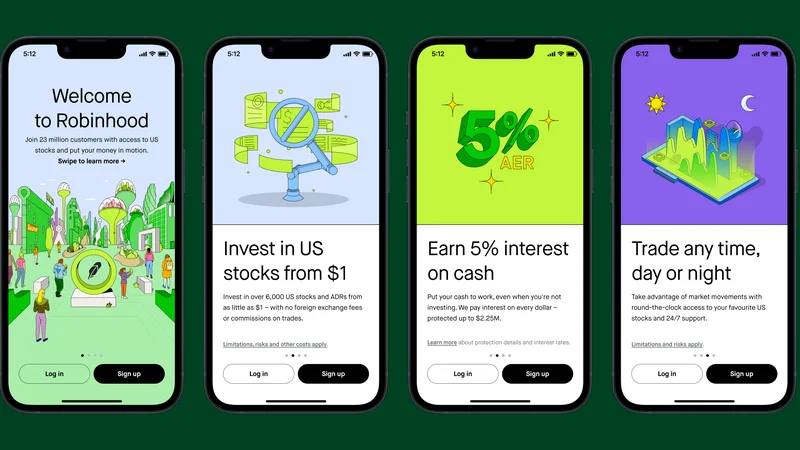
Analyzing Robinhood: What the New Gold Card Means for its 2025 Stock Price
Robinhood's$123BillionBet:IsT...
- Search
- Recently Published
-
- CME's "Glitch": What Really Happened & Who Pays - Meltdown Ensues
- Why Tether's Uruguay Exit is a Bitcoin Breakthrough (RIP Bitcoin Uruguay)
- Fintech 2025: Innovation or Just Data Reframing? - Thoughts?
- AI: Unlocking Your Channel's Evolution - Redditors Rejoice!
- Bitcoin Jumps: Dead Cat Bounce? - Crypto Twitter Reacts
- Uber Ride Demand: Cost Analysis vs. Thanksgiving Deals
- Stock Market Rollercoaster: AI Fears vs. Rate Hike Panic
- Bitcoin: The Price, The Spin, & My Take
- Asia: Its Regions, Countries, & Why Your Mental Map is Wrong
- Retirement Age: A Paradigm Shift for Your Future
- Tag list
-
- Blockchain (11)
- Decentralization (5)
- Smart Contracts (4)
- Cryptocurrency (26)
- DeFi (5)
- Bitcoin (31)
- Trump (5)
- Ethereum (8)
- Pudgy Penguins (6)
- NFT (5)
- Solana (5)
- cryptocurrency (6)
- bitcoin (7)
- Plasma (5)
- Zcash (12)
- Aster (10)
- nbis stock (5)
- iren stock (5)
- crypto (7)
- ZKsync (5)
- irs stimulus checks 2025 (6)
- pi (6)
- hims stock (4)
- kimberly clark (5)
- uae (5)